So what do you want to know?

MoniqueWillKnow@gmail.com


*Disclaimer*

Please don't go basing your PhD Thesis on anything I write here.
The information I provide comes with no guarantee of accuracy, and I'm just as likely to provide the most entertaining answer, as I am the factually correct answer.

**There are clickable links on some words to enhance your reading experience. Click them. You should. They're blue; it'll make their day**

Saturday, 11 June 2011

Should I be scared about the new Facebook Face Recognition?

It really annoys me when sensationalist articles are written designed to scare people about technology. Nine times out of ten it's easy to see that the issue is nothing to wet your pants over, so long as you ignore the overuse of exclamation marks !!!! and you don't let the words "privacy" and "security" give you heart palpitations.

The latest scaremongering is about Facebook's Face Recognition Photo Tagging.
WAIT!!! Stop running and screaming like a girl (really, you need to lift the knees more and the voice less), it's ok, really and truly.


"But I don't want random strangers tagging me in photos"

They can't. Only your Facebook friends can tag you. So unless you have Facebook friended Slimy John Who-Jerks-Off-Over-Blurry-Photos-Of-Fully-Clothed-Strangers Smith, you're ok. And if you have, then you have problems even I cannot fix.


"But I don't want any of my Facebook friends to post photos of me and to be automatically tagged without either of us realising"

Bravo. You show common sense and a healthy respect for your (freak-out phrase coming, be prepared) online privacy. Which is why I'm sure you disabled the photo application years ago. No?? You mean you want photos on your Facebook page? If you want photos on your profile, you have to allow tagging. You can remove the tag as soon as it goes up and that photo can't be tagged with your name again. If you have your settings set to only allow your friends to see your photos and photos tagged with your name, that is still the case - nothing in your privacy settings has been changed.
If you're not bothered by being tagged so long as it's not automatic, you're still a-ok. The new face recognition tool is only a suggestion. Your friend still has to click your name to accept the suggestion. And your name has to already be tagged in photos enough times that Facebook can associate your features to your name. In which case, you've been happy up to this point with being tagged, so stop whimpering.
If your friend is constantly accepting the suggestion that Buster the bulldog's ass looks like your face, your issue is with your "friend" as they have obviously tagged their dog's butt with your name enough times to encourage Facebook to think it's you.
Or maybe you do look like Buster's ass in which case, stop allowing photos to be taken of yourself and consult a plastic surgeon.


"But if Facebook can recognise my face doesn't that mean they have my image stored in a database somewhere?"

Yes. And Mark Zuckerberg has it wallpapering his million dollar office and he sniffs a lock of your hair he stole from your hairdresser's floor last month.
The reality is, if you have ever posted a photo of yourself online anywhere, including Facebook, it's on a database somewhere. That's what the internet means. If you don't like it, go back to printing your photos. But before you do, watch that Robin Williams film One Hour Photo where the guy at the printing shop makes extra copies from the negatives people bring in and keeps them for himself and his sick little fantasies. Sickos have been around forever. They weren't born with the internet.
And seriously, is that grainy photo up your snotty nostril of you draped across your equally drunk mate, really going to interest a criminal mastermind hacker who might be able to sneak past the Fort Knox security of the Facebook cloud storage servers? And will they search through the millions of images, ignoring Miranda Kerr breastfeeding and Blake Lively having sex, just to find your photo? And then sell it to Pepsi to use in their international marketing campaigns without paying you a penny? Yes??? Ok, again, you have issues beyond my capabilities.

"But I'm still irrationally scared"


Shhh, shhh, shhh. It's going to be alright. There, there. Go into your settings and opt out of allowing your friends to have your name come up as a photo tag suggestion. They'll just have to cope with tagging photos of you the old fashioned way using brain recognition. Be aware that this will involve them having to access the database of images they have of you in their head. Who knows what muck they will have to wade through before identifying the image of you. But if that makes you feel safer, it's worth it, right?
After that lengthy process they will then have to go through the arduous task of clicking "tag" which could take hours. Then the hard manual labour continues when they have to type the beginning letter of your name before the name recognition kicks in and Facebook says "Do you mean your good friend John Scaredy-Cat Smith?" and they say "Nay, Facebook, I shall shun thy devil influenced automated suggestions and type letter by letter the whole name myself".
Days later, your photo will have been painstakingly tagged by hand the way the pilgrims did it in the days of yore.

"But Professor Brian Lovell of the Advanced Surveillance Team at the University of Queensland is concerned"


What? Who?
According to a news.com.au article, the professor is concerned that photos of people before they went into witness protection could be used to tag photos of them after they have gone into witness protection and blow their cover.

*pain, extreme pain* nnneeeeeerrrrrrr.

*bangs head on wall several times*

I'm betting, in fact GUARANTEEING that the professor doesn't have a Facebook account and he thinks LOL means "lots of love".
He needs to read this post of mine and Witness Protection For Dummies and the chapters titled "Yes, you have to leave your friends behind, including your Facebook ones, or it doesn't work" and "Disguises are kinda important".

"But..."

I don't think you should be on Facebook.

By Monique Kowalczyk

So what do you want to know?
MoniqueWillKnow@gmail.com

*Disclaimer*
Please don't go basing your PhD Thesis on anything I write here.
The information I provide comes with no guarantee of accuracy, and I'm just as likely to provide the most entertaining answer, as I am the factually correct answer.

Sunday, 9 January 2011

B-B-B-B-Blushing

**A reminder to click on the blue words. It will enhance your reading experience. Maybe**

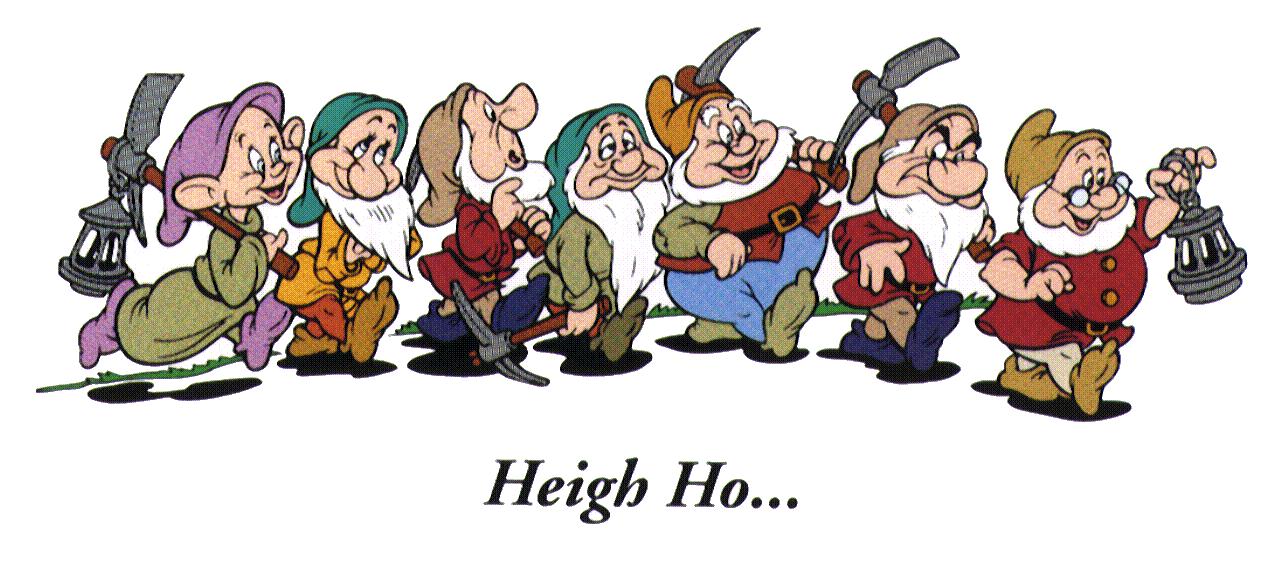
This enquiry came in from three of the seven dwarfs – Sneezy, Coughy and Curious.
I’m sure the question is on behalf of “a friend”, or more likely, a brother. Perhaps the brother was too Bashful to ask it himself?

I know why people blush, but why do some people
blush at the drop of a pin?”

Thank you boys for your question, but before I start in on the answer, I must stress to yourselves and readers of this blog post, that I do not condone the dropping of pins in any form.
This includes needles. As someone who has had surgery to remove the detached eye of a sewing needle that embedded itself in my heel when I was 13, it is no laughing matter. My appendectomy a few years later however, was HILARIOUS!
You three wise men claim to know why people blush, so if you could please pop a quick 500 word response explaining it, and email it over to me, I will post it alongside this post about why some people blush more than others.
While we await your detailed report on the physiology and psychology of blushing, I will provide a quick rundown on the main points, in case some of my readers (all two of them including me and my split personality) don’t know why we blush.
You can thank me later. I like diamonds. Or gold. I’m not sure what you mine for when you march off to work with your little pick axes and shovels, but if it’s tin, I’d prefer a cash offering.
What is blushing?
Firstly, we need to distinguish blushing from flushing. Nothing to do with toilets. Unless that smell was you, in which case you SHOULD be embarrassed. And checked out medically.
Flushing occurs in areas all over the body and is a more severe redness than blushing. And I’m not going to write too much about it today because it involves, by definition, a lot of sweat. Yuk. We’ll stick to blushing.
From www.thefreedictionary.com, blushing is a reddening of the face, especially from modesty, embarrassment, or shame”.
This can also extend to the ears, the neck and décolletage area in females. Or in men, the chest area above their pectoral muscles. Preferably, pecs that are sculpted from a few weight lifting sessions at the gym each week that may or may not have a sprinkling of manly hair and could even be slightly oiled...
What are some of the reasons we blush?
Apart from thinking of oiled pectoral muscles?
The emotions that can cause blushing are; embarrassment, self-consciousness, sexual attraction, shame and modesty. In some situations we can experience all of these emotions at the same time, if you get my drift – wink, wink, nudge, nudge.
And if you don’t get my drift, you’re obviously not doing it or not doing it right.
How do we blush?
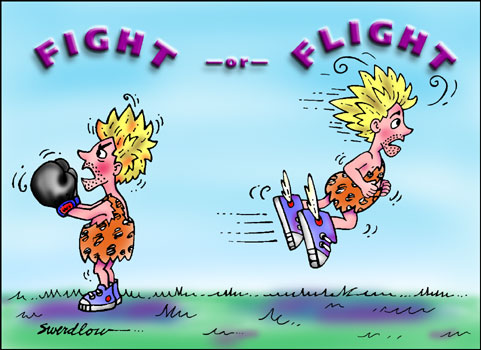
One of the things that separates blushing from flushing, is that it comes from a mental source. The mere thought of something embarrassing or sexy (pecs...) can cause the hormone adrenaline to be released, which then stimulates the small veins and capillaries of our face and neck area to dilate (expand), resulting in increased blood flow and oxygen delivery. It is part of the sympathetic nervous system or as it is more commonly known; the fight-or-flight response.
But why only in the facial area?
This is where it starts to get tricky.
Several different psychological and psycho-physiological mechanisms for blushing have been hypothesised, but none have been proven or universally agreed upon. Most theories work on the assumption that the cutaneous blood flow (blood to feed the skin) in this region is anatomically different to the other parts of our body. There are more capillary loops per unit area, more vessels per unit volume and blood vessels of the cheek are wider in diameter, are nearer the surface, and more easily seen as there is less tissue fluid in the area.
Therefore, when there is only a minor increase in blood flow as a result of minor stress on the body (for e.g. when you become self-conscious because you are thinking of someone you're attracted to), it is only visible in the facial area, despite the whole body being affected = blushing.
A greater source of stress on the body (such as exercise or heat), would result in a greater blood flow to the capillaries and veins of the body and would then be seen in other areas such as the arms, chest and feet = flushing. When flushing, the facial area becomes markedly redder than when we blush.
Skin conditions such as rosacea (or “The Celtic Curse” as it used to be known), can also cause some peoples' blush response to be more easily detected.
Yes, but how does the process of blushing help our body deal with embarrassment or shame? Why blushing and not something else?
What? Like farting? Would you prefer that was our body’s way of coping in stressful situations? Sheesh. Be happy it’s just a bit of a tinge in your face, and not a bottom trumpet, heralding your mortification.
Well lucky for you, Ray Crozier of the United Kingdom, a psychology professor of considerable experience who has written several books and papers on the psychological responses of humans, has been enlisted by me to find an answer for you. Well, me and the University of East Anglia have jointly enlisted his help. Ok, ok, JUST the University of East Anglia has enlisted his help. But I’ll be sure to “like” his Facebook page in thanks and help save his lonely Farmville cow.
My man Ray has concluded that blushing evolved as a way of communicating to our fellow cave men that we had acknowledged the social faux pas we just made, and that we were really, really sorry for eating the last BBQ pterodactyl wing that Grug was saving for breakfast the next day.
Ray also suggests that blushing displays emotional intelligence – the ability to monitor your own and others’ feelings and emotions. So all those blushing girls, hiding behind fans in Jane Austen’s books that we thought were dopey doras, swooning after poncy blokes in ruffles, were actually emotional Einsteins.
So to conclude, people who blush more readily than others, accompanied by dropping pins or not, could be deemed either;
a. More prone to social blunders that need physical apologies,
b. More emotionally intelligent, or
c. Have a skin condition.
Doesn’t sound too good does it?
I don’t think your brother Bashful, is likely to be scoring with Snow White anytime soon. Having “emotional intelligence, social ineptness and a skin condition” on an RSVP.com.au dating profile, doesn’t really rate that high with the lay-deez.
But then again, he is a dwarf, and portability in a boyfriend is always desirable.
Interesting fact – the operation to sever the tiny nerves in the spine that control blushing, is called an endothoracic sympathectomy. Try and say that six times fast.


By Monique Kowalczyk

So what do you want to know?
MoniqueWillKnow@gmail.com

*Disclaimer*
Please don't go basing your PhD Thesis on anything I write here.
The information I provide comes with no guarantee of accuracy, and I'm just as likely to provide the most entertaining answer, as I am the factually correct answer.

Thursday, 16 December 2010

*Caution - Contains the O word* My rant for the Oprah Bah Humbugs


This is what I posted on a Daily Telegraph Facebook page for Oprah fans, in response to the knuckle-draggers that are moaning about Oprah starving their kids and pets.

Ok this is (basically) what I posted on another comment which was a regurgitation of things I've been posting on this page for a few weeks. It makes me cranky that people buy into the sensationalist headings and severely edited (skewed) articles the media put out there to stir up talk and controversy.

That's not a dig at you Daily Telegraph! (Although I did forget to precede my comment with the get-out-of-jail-free disclaimer of "No offense, but...")

Merely a reminder for people to find the facts amongst the opinions and to use their intelligence before freaking out at emotion-tugging words and phrases like TAX PAYER DOLLARS (argh! Avert your eyes children!), AUSSIE BATTLERS NEGLECTED (quick children, scrape them up off the pavement, I think we can save them) and OPRAH CLAIMS ASHES WHILE SPITTING ON ANZAC BISCUITS AND DANCING ON DON BRADMAN'S GRAVE.
See if you can spot the fact from fiction.

Let's just remember that Oprah isn't Pacman and your family's grocery money isn't the pac-dots she consumes.

$5m through Tourism Australia (the tax dollars SOME people are freaking out over) was used to pay for logistics within Sydney surrounding the event - redirecting traffic, extra police patrols for crowd safety etc.
None of that $5m went to Oprah, Harpo or anyone to do with the event. Everything else was paid for by corporate sponsors who would have otherwise spent the money on those annoying ads in between your favourite tv programs, or between the pages of your magazine.
And that $5m will very quickly be turned into many, many more millions now and in years to come by the tourism it generates.

And every single one of the 200 audience members she brought over plus the 200 staff members, all spent money here and paid GST on the goods and services they used. That tax money goes directly down the line all the way to our primary producers.

I've said this a few times on this board - $5m for 4 hours of prime time advertising in over 100 countries, presented by one of the most famous faces in the world = BARGAIN.

Compare it to the $180m that was spent on bikini-clad Lara Bingle skipping across the sand yelling "Where the bloody hell are ya?", an ad campaign that did not, and could not, net us nearly as much publicity and ergo, money, and there is no logical angle to complain from.
Our country (and its people) have, in huge part, tourism to thank for the standard of living we enjoy, the natural beauty that has been preserved for aesthetics' (if not always morals') sake and the infrastructure we take for granted every day.

Tourism Australia has a budget to spend every year on promoting our country as a destination to the world. $5m is such a tiny part of that budget and this year, it was allocated to the Oprah event. Next year, that same $5m will go towards something you will probably never hear of, let alone have a chance to participate in.

Oprah has had the tourist boards of countless countries courting her for years, to come and visit their country to promote it. And out of all the ones she could have chosen, she chose ours. The first and only Oprah show to be filmed outside North America and WE got it. TWO in fact!
Even if you're not a fan of Oprah, Americans, pink diamonds, tv shows or indeed anything fun, if you are an Australian resident, YOU WILL benefit from this.

This event will be the literal manifestation of what she said to the crowds yesterday, which was a more flowery version of the old adage - you reap what you sow.

We put in one small seed and from it we will harvest so much more.

Plus I got a pink diamond necklace. Nuff said.

Ok. I'm finished.

By Monique Kowalczyk

So what do you want to know?
MoniqueWillKnow@gmail.com

*Disclaimer*
Please don't go basing your PhD Thesis on anything I write here.
The information I provide comes with no guarantee of accuracy, and I'm just as likely to provide the most entertaining answer, as I am the factually correct answer.

Sunday, 22 August 2010

Too much pepper.

Louise asks:
We know too much salt is bad for you, but what about pepper? Are there health risks from having too much pepper?

In short, no.

In long, it has benefits, such as aiding digestion by stimulating taste buds which in turn encourage the stomach to produce more hydrochloric acid which is necessary for the digestion of protein. It is also diaphoretic (makes sweat) and diuretic (makes wee).

It was also used as currency in Ancient Greece. If you thought 5c coins were annoying, imagine peppercorns in your Oroton purse.

Interesting fact: pepper is also a carminative, meaning it helps stop you farting. I rekon that's rubbish. My Gran snowed everything with white pepper and she trumpeted like James Morrison until she died.

By Monique Kowalczyk

So what do you want to know?
MoniqueWillKnow@gmail.com

*Disclaimer*
Please don't go basing your PhD Thesis on anything I write here.
The information I provide comes with no guarantee of accuracy, and I'm just as likely to provide the most entertaining answer, as I am the factually correct answer.

Celebrity baby naming. Why?

Charlene asks:

Monique, I want to know... why would Natalie Bassingthwaite name her defenseless baby girl Harper Rain Sinclair McGlinchey? Harper is a book publisher, rain is a type of weather, Sinclair is a surname, but who's, is it short for Bassingthwaite? and McGlinchey, OK, I get that, it's her Daddy's surname. Can you explain celebrity naming in general?


Well, Charlene, you've unwittingly fallen into the trap set by Miss Bassingthwaighte, that trap being the trail of names she sprinkled around like kindling, that you have now gathered up to create a fire of celebrity gossip. Or "spark" might be a more appropriate analogy for this forum. I need more followers to warrant a "fire".

Call me cynical, call me cyclical (Cyclical has 9-1 odds for the Bloom/Kerr baby name) but I do believe it is all in aid of that addictive drug called Publicity. Stealing from rapper Nelly, let me break it down for you.

Firstly, I shall steer clear of the first name, Harper, as I know a little girl called Harper and I can't be impartial enough to make bitchy comments. Not in public anyway.

Sources close to the star, but still adhering to the 100m court-ordered distance, tell me the choice of Rain could be attributed to the latest celebrity craze of Cosmic Ordering. By writing the name down on the birth certificate, Natalie has asked the cosmos to deliver her wish of rain for the drought addled outback of Australia. Alternatively, it could affirm her wish to rule Australian TV and improve her spelling.

Sinclair, must surely be a respectful nod to a dead grandparent or a humorous nod to the disastrous Sinclair C5 electric car of the 80s. I'd hazard a guess it's the first, but would LOVE for it to be the second.

These theories address the justification of the names chosen, but not the crucial "how could you?" element of celebrity baby naming. I have a further theory on that and it goes a little something like this.

For those profoundly famous people, your David Beckhams, Angelina Jolies and Madonnas, their fame is so great, its macrobiotic energy will continue through several generations. This means their children, grandchildren and possibly great-step-half-grandchildren will be famous for no other reason than for being their kin. With this fame, comes money. Usually lots of it too. Therefore, these inherited-fame kids will always be well known no matter what they do and most likely, they won't even need to "do" anything. So why worry about what other, lesser, mere-mortals think about the choice of name you give your adopted orphan? Annie is sooo 1980s, unless you change the spelling to Anii.

The problem with weird names for average folk, is having to deal with the double-takes, sniggers, probing questions and "Sorry, didn't quite catch that..." responses when introducing yourself to people. Not to mention having difficulty being taken seriously as a corporate solicitor or investment banker when you have to sign subpoenas or cheques with "Rhino Ferragamo Blackett-Wrench"

Uber-celebrity sprogs will never have this problem as their fame will always overshadow the weirdness of their moniker. No one will be sniggering at Romeo Beckham's name because they will be too busy trying to wrangle a signed copy of his mum's latest CD. Or maybe not.

This super-celebrity baby naming trend then trickles down to your standard celebrities, your high profiles, your b-lists, c-lists, z-lists, weathermen, 15 minutes of reality TV fame people and finally settling at the bottom of the barrel with your Channel 9 TV presenters. They delude themselves into thinking they too will be able to get away with naming their children after colours on the Dulux Matte Acrylic Paint wheel but sadly, they can't. Their fame is hardly big enough to cover their own inflated sense-of-self, let alone stretch to accommodate their spouse or children.

So poor Mahoganee Elastoplast Stefanovic M.D., will be forever fighting for respect in the medical world while her colleagues affectionately refer to her as "the hog" and her patients wonder if her father was a Davis Cup tennis player in the 90s.


By Monique Kowalczyk

So what do you want to know?
MoniqueWillKnow@gmail.com

*Disclaimer*
Please don't go basing your PhD Thesis on anything I write here.
The information I provide comes with no guarantee of accuracy, and I'm just as likely to provide the most entertaining answer, as I am the factually correct answer.

Monday, 26 July 2010

Lawn vs Grass

Charlene writes:
“I haven’t bothered Googling this myself because Monique will know! When is grass considered lawn? Why does one generally mow lawns but play on the grass? Hmm? Can’t wait to find out!”
Well, let me start by saying Charlene, you’ve come to the right place. As someone who grew up in the North West of Sydney on the mandatory quarter-acre block, I am undoubtedly qualified to answer your lawn and grass playing query. Plus, I have an Aunt called Lorna.
The first part of your question enquires about the definition of lawn, specifically, when grass becomes lawn. It is also the place where we stumble across the first problem, which is; your question. It’s the wrong one.
Grass becomes lawn when it is tended to. The question should be; what can be considered lawn? Why should this be the question? Because it allows a longer answer and is therefore more suitable for my blog.
According to the bits of Wikipedia I like or agree with, lawn consists of grasses or other low-lying, durable plants that are maintained at a low and even height.
In the case of my mother, this can involve a camomile patch that people are encouraged, nay forced, to trample over, in order to release its subtle fragrance, thereby masking the smell of dog turd visitors must step in to get to the camomile patch.
Lawn maintenance is done by machine (lawn mower or grass cutter), by hand using a scythe while wearing a black cloak and Scream mask, or by grazing animals such as goats, sheep or confused pigs.
The criteria of lawn needing to be maintained and not always being made of grass, explains why we “mow the lawn”.
So why “play on the grass” and not “play on the lawn”?
As a lawn can be made of plants other than grass, it helps to identify which type of lawn you wish your children to play on. My father took this clarification one step further, and specified which grass in particular we were allowed to play on.
“You can go on the buffalo, but stay off the couch if you’re playing ball games or wearing shoes and for god’s sake don’t go anywhere near the mini-mondo, I just put Osmocote on it and your mother will kill me if you walk that into the house”
Actually, we could all take a blade of grass out of my dad’s book regarding being particular when banishing our children to the backyard. As rice, bamboo and barley are also grasses, it would be of benefit to all if we specifically named the exact grass we mean.
“Out to the bahiagrass children”
“Why don’t you play on the carex praegracilis instead of watching TV?”
"I'm a boy so I don't need to go on the toilet, I can just do it out there on the kikuyu"
Or you could issue no such instructions and employ Holden Caulfield to safely monitor and catch your children as they roam through the waving cereals of your rye field. Up to you.
Closing fact – cannabis is not a grass.

By Monique Kowalczyk

So what do you want to know?
MoniqueWillKnow@gmail.com

*Disclaimer*
Please don't go basing your PhD Thesis on anything I write here.
The information I provide comes with no guarantee of accuracy, and I'm just as likely to provide the most entertaining answer, as I am the factually correct answer.

Tuesday, 20 July 2010

Why does Facebook default to "Top News", even after I have selected "Most Recent"?

From the Facebook help centre -

Top News aggregates the most interesting content that your friends are posting, while the Most Recent filter shows you all the actions your friends are making in real-time.

The News Feed algorithm bases this on a few factors: how many friends are commenting on a certain piece of content, who posted the content, and what type of content it is (e.g. photo, video, or status update).


And that's about it. No information on how to set "Most Recent" as your default. After Googling, it seems even the anoraks of the social networking world haven't found a work around.


My suggestion is you "Like" this page I hate "Top News" by clicking...it...really...REALLY...HARD.


By Monique Kowalczyk

So what do you want to know?
MoniqueWillKnow@gmail.com

*Disclaimer*
Please don't go basing your PhD Thesis on anything I write here.
The information I provide comes with no guarantee of accuracy, and I'm just as likely to provide the most entertaining answer, as I am the factually correct answer.